Pandit Management Software for Duty Rosters and Daily Assignments
Every pooja covered, by a named pandit, every day
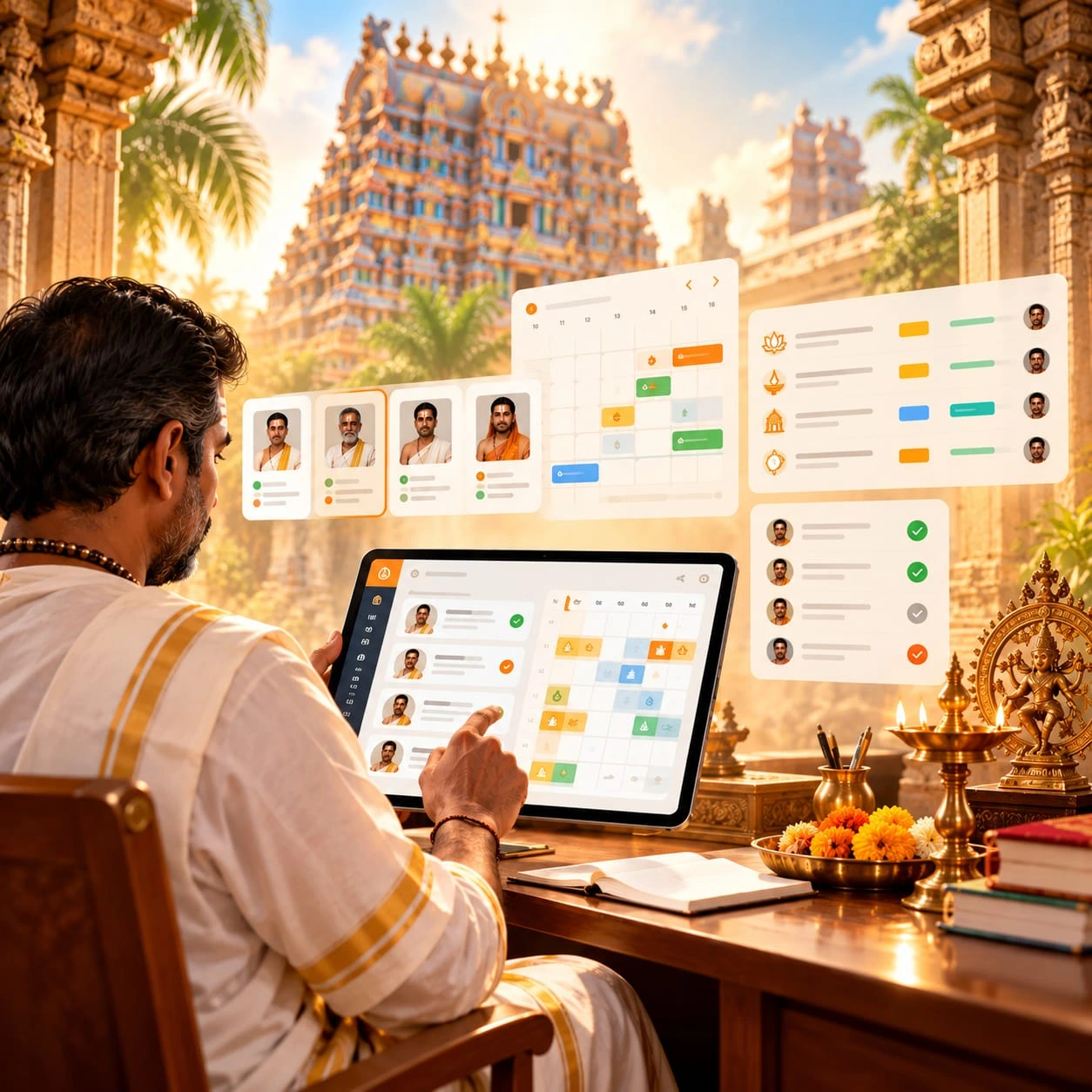
Pandit management software keeps priest profiles, duty rosters and daily assignments in one place. Availability, leave and attendance sit against each profile, so the roster reflects who is actually on duty and no ritual is left uncovered.
Trusted by 90+ temples across India, Singapore, Malaysia and the USA
Today's duty roster
Auto-assigned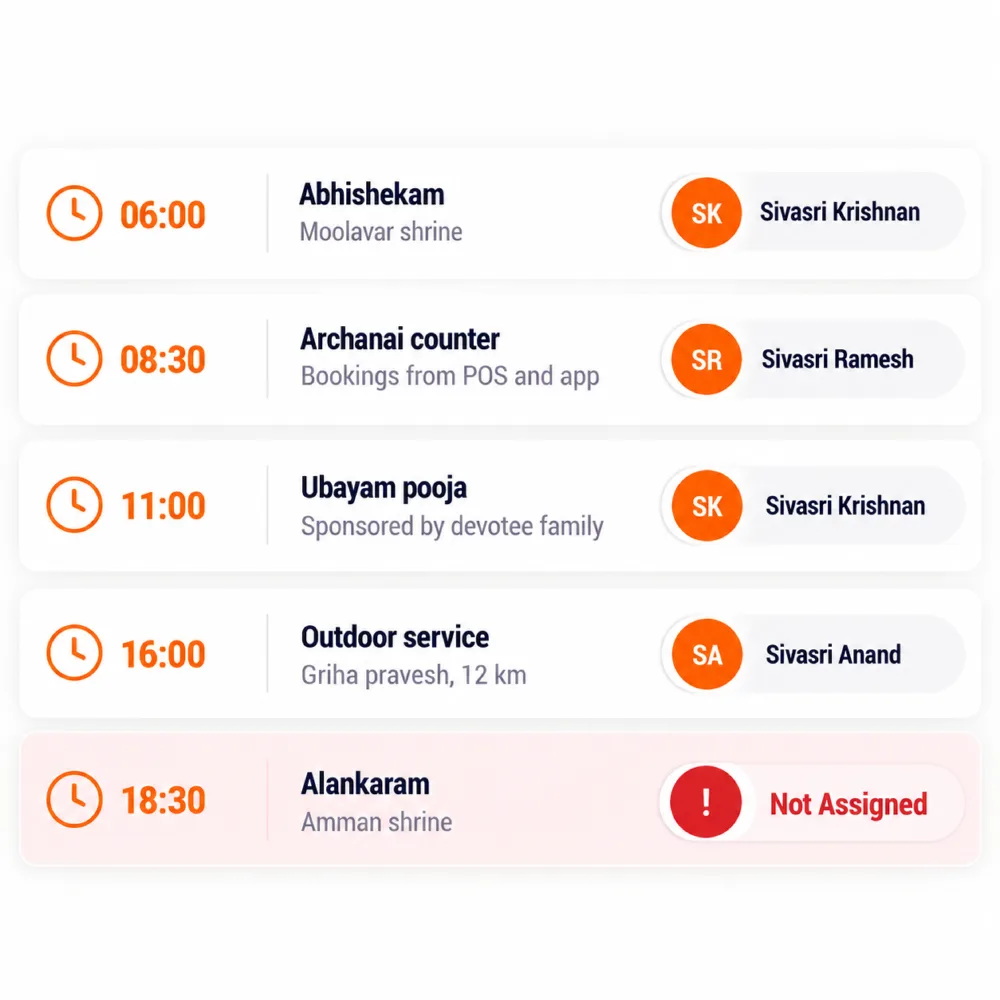
One roster the whole temple works from
Instead of a roster on paper in the office and a booking list at the counter, both live in the same system. When a devotee books an archanai, ubayam or outdoor service, it lands on the pandit schedule for that day and shrine, already assigned.
Leave is recorded against the profile, so a gap in the roster is visible before the morning it matters rather than after. Attendance is recorded as duties are performed, and that record is what payroll works from at the end of the month.
It is one module of our temple management software, so bookings, billing and accounts all read from the same records.
What the pandit module handles
From the morning abhishekam to the month-end payslip.
Pandit Profiles
A record for every pandit, with the services they perform and the shrines they serve.
Duty Rosters
Daily assignments for every pooja and service, so each ritual has a named pandit against it.
Availability and Leave
Leave and availability kept against each profile, so the roster is built around who is actually there.
Deity Scheduling
Abhishekam, alankaram and darshan timings planned per deity, without two shrines claiming the same pandit.
Outdoor Services
Home poojas, ceremonies and processions scheduled, tracked and billed, travel logistics included.
Attendance to Payroll
Attendance feeds salary processing and statutory deductions, with payslips generated automatically.
Reminders
Assignment and booking confirmations sent by SMS or WhatsApp the moment they are recorded.
Duty Reports
Who performed what, when and where, ready for trustees and for the monthly review.
Role-Based Access
Schedulers, accountants and administrators each see only what their role allows, with an audit trail.
From a devotee's booking to a pandit's duty list
Booking made
A devotee books an archanai, ubayam or outdoor service at the counter, online or in the app.
Assigned to a pandit
The booking lands on the schedule for that shrine and day, against the pandit on duty.
Duty list shared
Each pandit has a clear list of what to perform, where and at what time.
Attendance to payroll
Attendance is recorded as duties are performed and feeds salary processing.
Temples where the roster is real work
Temples with several pandits
A roster that has to be rebuilt every week, with leave and festivals moving it constantly.
Multi-shrine temples
Abhishekam and alankaram timings per deity, coordinated so nobody is double-booked.
Temples offering outdoor services
Home poojas and ceremonies that take a pandit off site for part of the day.
Trusts and Devasthanam boards
Several temples under one board, each with its own roster and its own reports.
Festival committees
Days when the schedule triples and every slot still needs a named pandit.
Temple administrators
Anyone who answers the question "who is performing this, and were they here?"
Built only for religious institutions
Our technology journey began with early temple implementations in 2015. Since 2024, we have accelerated our focus on temple digitalization, expanding our solutions across 90+ temples and continuing to build a connected ecosystem for modern temple management.
Pandit management is not a staff scheduling tool with temple words on it. Archanai, ubayam, abhishekam, alankaram and outdoor services are the units the module is built around.
What temples ask about pandit scheduling
If your question is not here, ask it directly and we will answer with your own roster in mind.
What is pandit management software?
Pandit management software keeps priest profiles, duty rosters and daily assignments for every pooja and service in one place, along with availability, leave and attendance, so every ritual is covered and nothing depends on a handwritten roster.
How does a seva booking reach the right pandit?
Every archanai or seva booked at the counter or online lands on the priest schedule automatically, assigned against the roster for that day and shrine.
Can it handle several shrines in one temple?
Yes. Deity scheduling plans abhishekam, alankaram and darshan timings for each deity, coordinating priest availability so two shrines never claim the same pandit at the same time.
Does it cover outdoor services and home poojas?
Yes. Priest-led outdoor services such as home poojas, ceremonies and processions are scheduled, tracked and billed in the same system, including travel logistics.
How are leave and attendance recorded?
Availability, leave and attendance are kept against each priest profile, and attendance feeds payroll, so salary processing and leave records stay consistent.
Can pandits be paid through the same system?
Yes. Payroll handles attendance, salary processing and statutory deductions for temple employees and priests, and commission management tracks incentive payouts where a temple uses them.
Put your roster on one screen
Book a demo and we will build a sample roster from your own shrines, services and pandits.